Image Credit: Wikimedia Commons
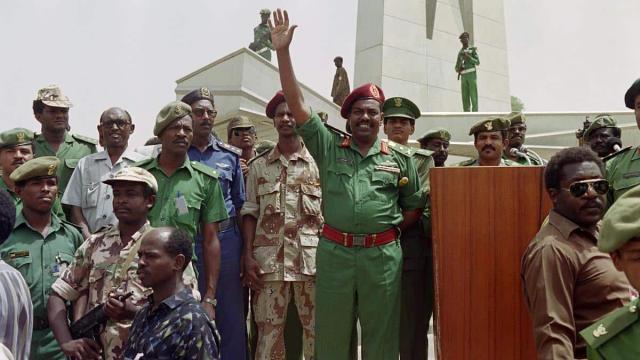
This thesis examines the rise and collapse of political Islam in Sudan between 1989 and 2019. Following the National Islamic Front’s 1989 coup, the Inqādh (Salvation) regime sought to institutionalise a Shari‘a-based Islamist state, consolidating three decades of authoritarian rule under Omar al-Bashir. Its tenure was marked by internal fragmentation of the Islamist movement, prolonged civil conflict, the Darfur genocide, and the secession of South Sudan, before a peaceful popular uprising toppled the regime in April 2019. Existing scholarship has addressed discrete aspects of Sudan’s Islamist experiment, yet remains fragmented and lacks longitudinal analysis integrating its ideological, political, socio-economic, and religious dynamics. This study therefore asks why the political Islam project failed to establish a stable, unified Islamic state, and what roles socio-economic complexity, religious pluralism, and civil conflict played in its collapse. It contributes to broader debates on Islamist governance, state fragmentation, and post-authoritarian transition in the Global South.
Details
14th August 2026 from 11am – 12pm
in-person + online (via Zoom)
Tutorial Room 1.14
CAIS – ANU
Light refreshments will be served after the presentation.
All welcome
Zoom Details
https://anu.zoom.us/j/89164408518?pwd=mstixMicBtu25jqGWLRCNSjfaKG2lY.1
Meeting ID: 891 6440 8518
Password: 531901
Location
Speakers
- Alam Talib (PhD Candidate)
Contact
- Prof. Karima Laachir0261258029